Heathen Herder
returning to the roots of Wild Irish Farmstead

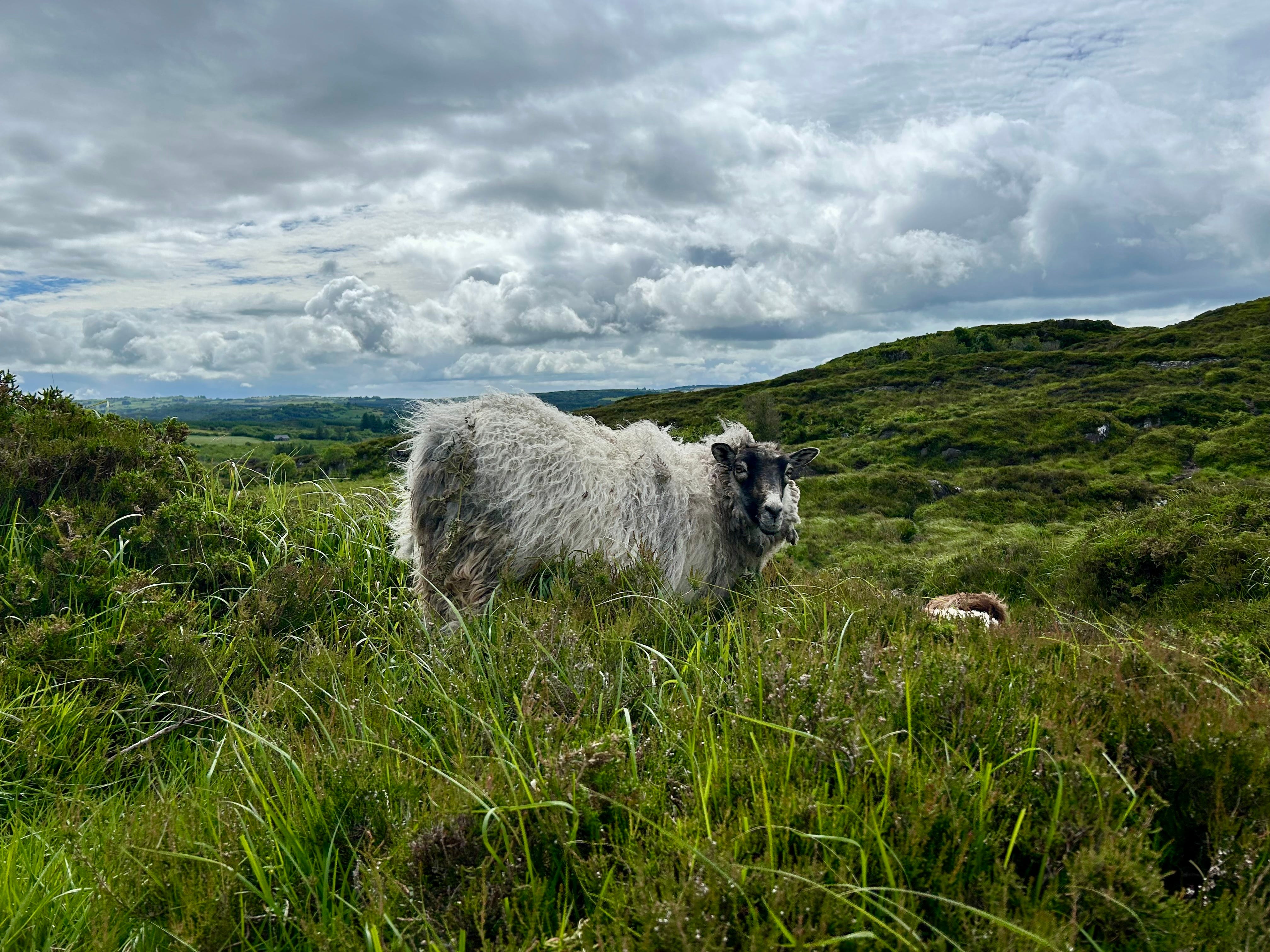
My arms and my senses are full with sheep, hot and thick with wool grown from heather and rain, greasy with lanolin and heavy with the scents of the land it’s grown from, of mud and sweet myrtle and moor grass. My sweat runs tracks through the dirt on my skin, my bare skin scratched by twigs of heather and needles of gorse. My back aches—a tearing, searing, white-hot ache that rips up and out from the hollow between my hips and forces my breath in swearing bursts. My shoulders begin to burn under the heightening sun. The sheep slumps between my knees, her weight pulling every screaming muscle in my bent and tortured back, her body soft and pliable, yielding to the age-old dance between shepherd and sheep, her full fleece falling to the rhythmic shclip-shclip-shclip of my blades.
For seven years now, I have been building this flock, this farm, on this Hill. That feels significant. In ecology, seven years marks a threshold in how a landscape regenerates after a shift. It is the time it takes for a newly managed or disturbed piece of land to stabilise its soil microbiome and regenerate, when pioneering, annual weeds and grasses give way to deep-rooted perennials, shrubs and young saplings. It takes roughly seven years of living and working with the same piece of land to experience the full spectrum of its weather, to map its microclimates, to know the land through all seasons, in almost every extreme. It is also the time it takes to establish a flock of sheep—for the flock to fully heft to the land, generation upon generation, to become part of it, for the land and the weather to weave through their genes.
This year, for the first time ever, barn swallows have nested, hatched and are just about to fledge their young on our Hill, in the shed we built for our goats four years ago. They dive in and out of the shed door, swoop low over my head and shriek at me as I shear.
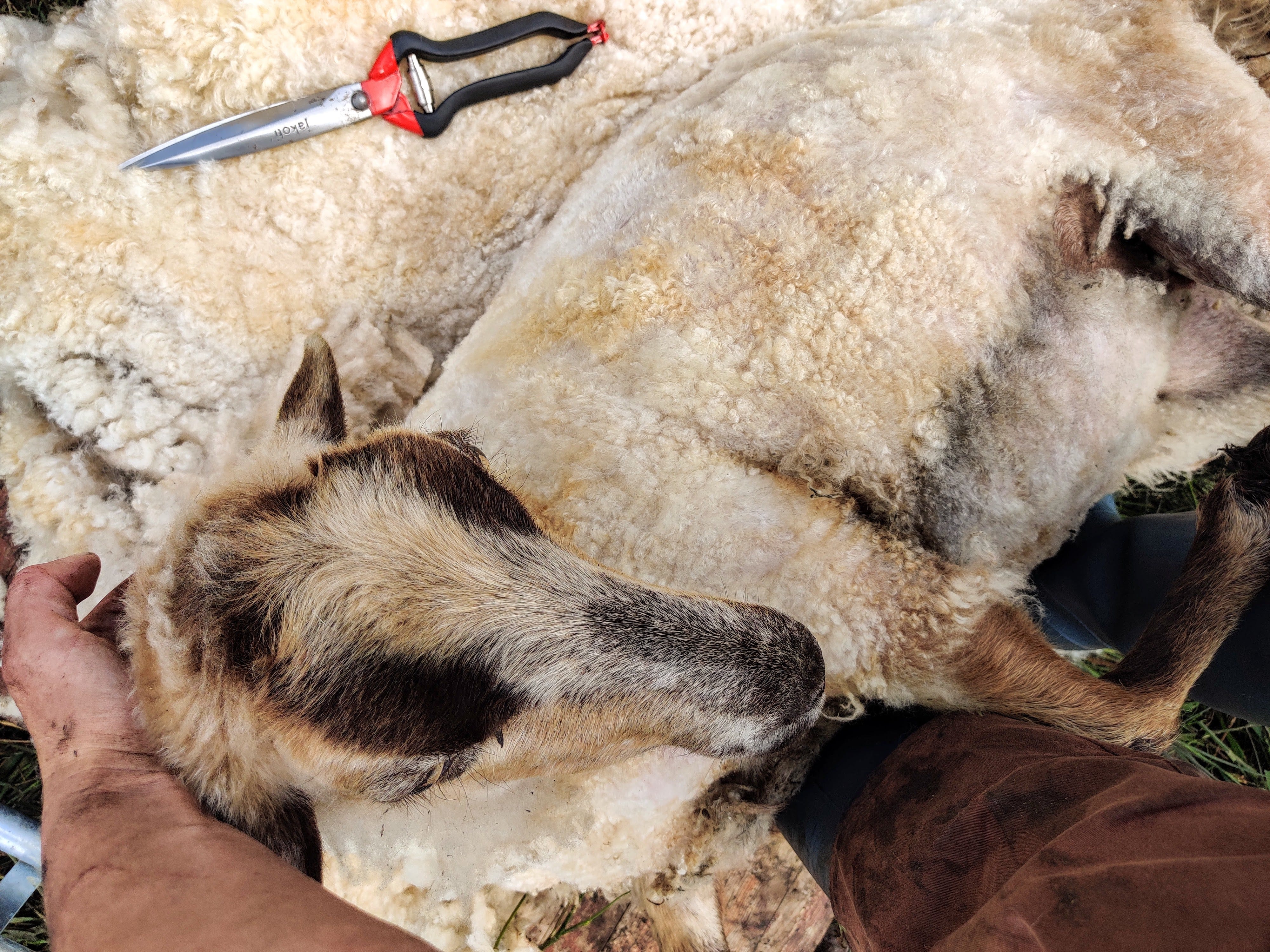
Long before I started this Substack, my story with this land and these sheep began with the wool. I chose Shetland and Connemara Blackface sheep for the Hill, for their hardiness, for their adaptedness to the terrain, the rough forage and the climate, and for their beautiful, thick and flowing double fleeces in colours of clay, peat, quartz, iron and shale—the colours of the land. Some of you, my longtime subscribers here, already have my handcrafted rugs made from these fleeces adorning your homes.
You all know that my wool work had to take a back seat for a while, whilst we lived wild on the Hill. I am ready to return to it again. But, under a new name to reflect the evolution of this flock and farm, and me. This land, these sheep, and the crafts of weaving, spinning and felting the fibre that grows from them belong to a much older wildness than Wild Irish Farmstead can hold. The name ‘Farmstead’ suggests a taming I have never sought; a taming this land would never submit to. I have learnt a lot from this land in the seven years I have spent with it. I have learnt how small I am, how insignificant in the face of the wild and unforgiving succession of the seasons. I have learnt that the land doesn’t need me, or us. That it’s better to slow down and listen and let the land lead than try to shape it to our will.
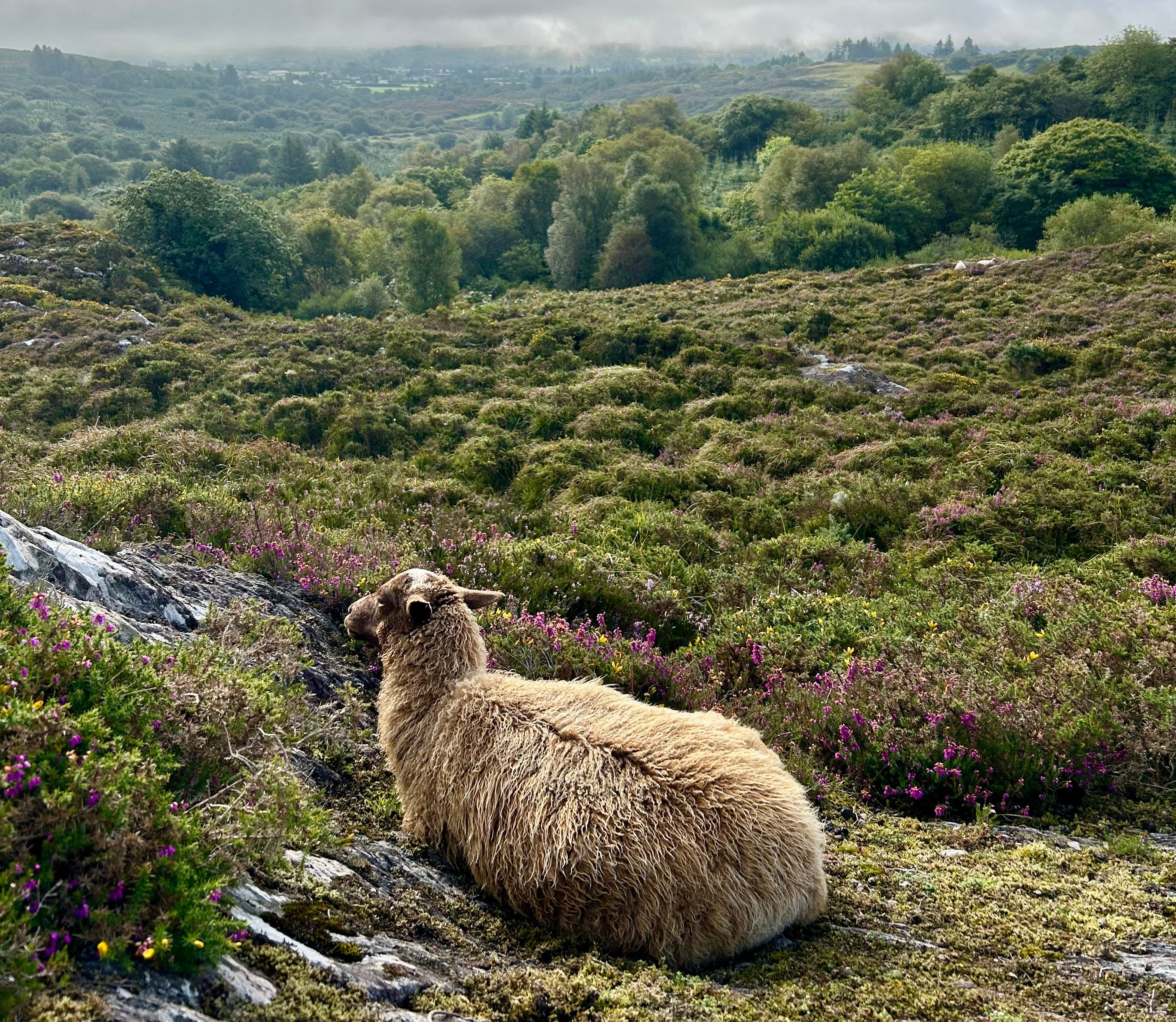
My foundation ewes (and rams) are beginning to age. Their fleeces grow greyer with every shear. Their daughters and granddaughters are born of this Hill. They were born in the heather and reared on it. The heather is threaded through them just as the hills and the weather have woven into their DNA. This year’s fleeces are heavy and strong, grown for the wet and rugged wildness of these hills. This is what they were bred for.
The next time I show up in your inbox it will be under the new name of Heathen Herder.
I am reclaiming the word ‘heathen’ in its original meaning. It comes from an old Germanic root meaning ‘dweller on the heath’. It describes someone who lives in the hills, someone rooted in the uncultivated, wild places—in the heather, the gorse and the shale. Someone who accepts the wildness rather than taming it. It describes someone not just farming the land, but part of it, hefted to it, like the sheep. I am a dweller on the heath, herding a flock that belongs to this landscape, consuming the milk and the meat and crafting the fibres that are made of this Hill. And I think Heathen Herder reflects the raw, untamed, wild beauty of this place and the heritage sheep’s wool rugs I make from it.
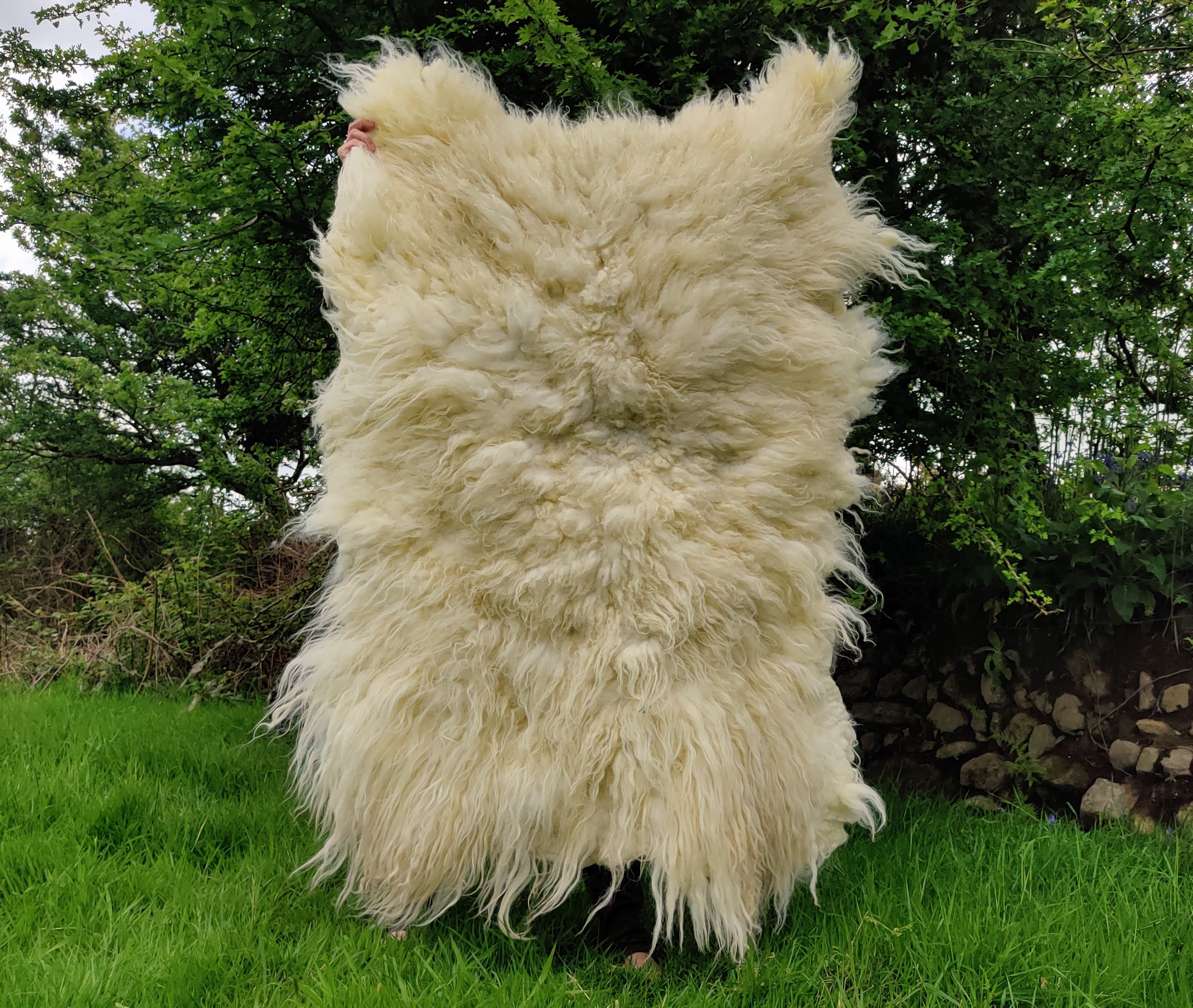
Moving forward, I will share the crafting of my wool rugs with you here as well as the stories from the land. And, aiming for September as the season turns, I will open a brand new web shop under this new name to offer these crafts.
My hands can only weave so many wefts and felt so many fleeces. My flock is small, my sheep are named, hand-tame and hand-sheared each summer by me. Every piece I make is the product of one or two sheep and a single season, which means these collections will naturally be very small, seasonal, and entirely unique. I have no desire to rush this process, nor upscale it, nor shout about it to the wider world. So, as a thank you for being here, this space will always be the priority list when I have wool rugs and hand-spun yarns from my flock to offer.
Nothing will change about my writing here, and I hope you will stay for the stories regardless of whether you’re interested in the crafts. But, should you wish to hold a piece of this Hill in your hands, as a subscriber here you will always be first to see new pieces, and get early access to new shop drops before they open to the wider public.
Thank you for being part of this evolving story. Right now, the season’s shear is coming in slowly as the weather and my aching back allow and my hands are full with wool. I can’t wait to show you what I am working on.
Thank you for this post, and may Heathen Herder thrive.
This post reminds me of a thread of conversation that used to weave around the person (now sadly deceased) of Colm Sweeney, native to the Ardara, Co Donegal area, who grew up on a sheep farm, and whose adult life was full of working with wool as a spinner and weaver and dyer, as well as becoming an accomplished artist.
The conversational thread touched in many places on the way he spoke of rearing sheep in the heather, shearing them, working with the fleeces through spinning and dying, picking up the colours of the land, and weaving, and eventually producing the tweeds to make suits and waistcoats you could wear... all of this he spoke of as a single, and whole, interconnected web of process... by means of which, as he would say, you could "wear the land on your back."
https://colmsweeneyartist.com/ RIP
You write beautifully. I very much enjoyed this and wish you all the best with the Heathen Herder (great name!).